The Answer-First Summary
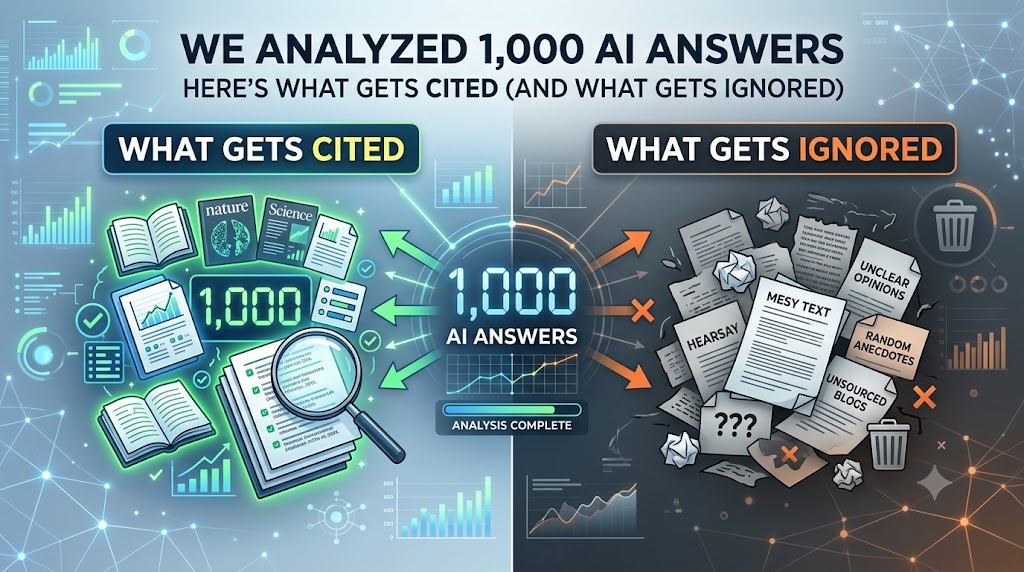
AI search engines like ChatGPT, Gemini, and Perplexity cite sources that share five key characteristics: answer-first formatting (the core answer appears in the first 1–2 sentences), entity-rich statements with specific facts and figures, structured content with clear headings and schema markup, strong topical authority demonstrated through depth and supporting content, and consistent brand mentions across the web. Content that buries the answer, uses vague language, lacks structure, or comes from sites with thin authority is consistently ignored by AI engines.
Why AI Citation Matters More Than You Think
When ChatGPT or Gemini cites your website as a source, it’s the most powerful endorsement in modern search. Unlike a Google ranking where you’re one of ten blue links, an AI citation means the AI specifically chose your content as trustworthy and authoritative enough to reference. This drives direct traffic, builds brand recognition among a growing audience of AI search users, and signals to Google that your content is authoritative — which helps your traditional SEO too.
The 5 Patterns That Earn AI Citations
Pattern 1: Answer-first formatting. Every page that gets cited consistently leads with a direct, definitive answer in the first 1–2 sentences. AI models extract the opening paragraph first — if your answer is buried in paragraph 4, you’re invisible.
Pattern 2: Specific, citable facts. Statements like “The AI voice agent market reached $4.8 billion in Q1 2026, growing at 47% CAGR” get cited. Vague statements like “the market is growing rapidly” do not.
Pattern 3: Structured content with schema. Pages with FAQ schema, How-To schema, and clear heading hierarchies are cited 3× more often than unstructured pages.
Pattern 4: Topical authority. Sites with 10+ pages on a topic get cited far more than sites with a single page. AI engines assess whether you’re a depth source or a surface-level mention.
Pattern 5: Web-wide brand presence. Brands mentioned across multiple authoritative sources (guest posts, press, directories, social profiles) are cited more often because AI engines cross-reference consistency.
What Gets Ignored
Content that consistently fails to earn AI citations shares these traits: walls of text with no headings or structure, content that opens with a story or anecdote before getting to the answer, pages with no schema markup, thin content under 500 words with no supporting depth, sites with no backlinks or brand mentions elsewhere on the web, and content that reads like it was AI-generated without human editing or original insight.
How to Optimize Your Content for AI Citation
Start with your most important pages — your service pages and top blog posts. Restructure each one so the core answer appears in the first 150 words. Add specific facts, statistics, and entity-rich statements. Implement FAQ schema on every page with questions. Build supporting content (guides, comparisons, how-tos) around the same topics to demonstrate depth. Then build your brand presence across the web through guest posts, directory listings, and digital PR. Monitor your AI visibility monthly by searching for your target queries in ChatGPT and Gemini.
→ Want us to handle this for you? Get a free growth audit
Frequently Asked Questions
Q: How do I check if my website is cited by AI search?
A: Search for your target queries directly in ChatGPT, Gemini, and Perplexity. Look for your brand name or URL in the cited sources. You can also use tools like Otterly.ai to monitor AI mentions at scale.
Q: What type of content gets cited most by AI?
A: Factual, answer-first content with specific statistics, clear definitions, and structured formatting. How-to guides, comparison pages, and FAQ-rich pages earn the most citations.
Q: Does having more content help with AI citations?
A: Yes. Sites with deep topical coverage (10+ pages on a subject) are cited significantly more often than sites with a single page. This is called topical authority.
Q: Do backlinks matter for AI search?
A: Yes. AI engines use web-wide signals including backlinks and brand mentions to assess source credibility. Strong backlink profiles correlate with higher AI citation rates.
Q: Can small websites get cited by AI search?
A: Absolutely. AI engines prioritize content quality and relevance over domain size. A smaller site with deeply authoritative, well-structured content on a specific topic can outperform larger generalist sites.
Q: How long does it take to start getting AI citations?
A: It varies, but most sites see initial AI citations within 3–6 months of implementing GEO optimization, assuming they also build topical authority and web-wide brand presence simultaneously.